
- Home
- About Us
- Courses
- Cosmetology Courses for Doctors
- Post Graduate Diploma In Clinical Cosmetology Pune
- Fellowship in Non-Surgical Injectables
- Fellowship in Non-Surgical Facial Implants
- Diploma in Microblading & Micropigmentation
- Diploma in BB Glow
- Diploma in Aesthetic Gynecology
- Certification in Hair Transplant
- Certification in Fat Grafting
- Diploma in Clinical Diet & Nutrition
- Cosmetology Courses for Non Doctors
- Cosmetology Courses for Doctors
- Faculty
- Resources
- Blog
- Contact us
- Home
- About Us
- Courses
- Cosmetology Courses for Doctors
- Post Graduate Diploma In Clinical Cosmetology Pune
- Fellowship in Non-Surgical Injectables
- Fellowship in Non-Surgical Facial Implants
- Diploma in Microblading & Micropigmentation
- Diploma in BB Glow
- Diploma in Aesthetic Gynecology
- Certification in Hair Transplant
- Certification in Fat Grafting
- Diploma in Clinical Diet & Nutrition
- Cosmetology Courses for Non Doctors
- Cosmetology Courses for Doctors
- Faculty
- Resources
- Blog
- Contact us
Hair Transplant Course for Doctors in Pune
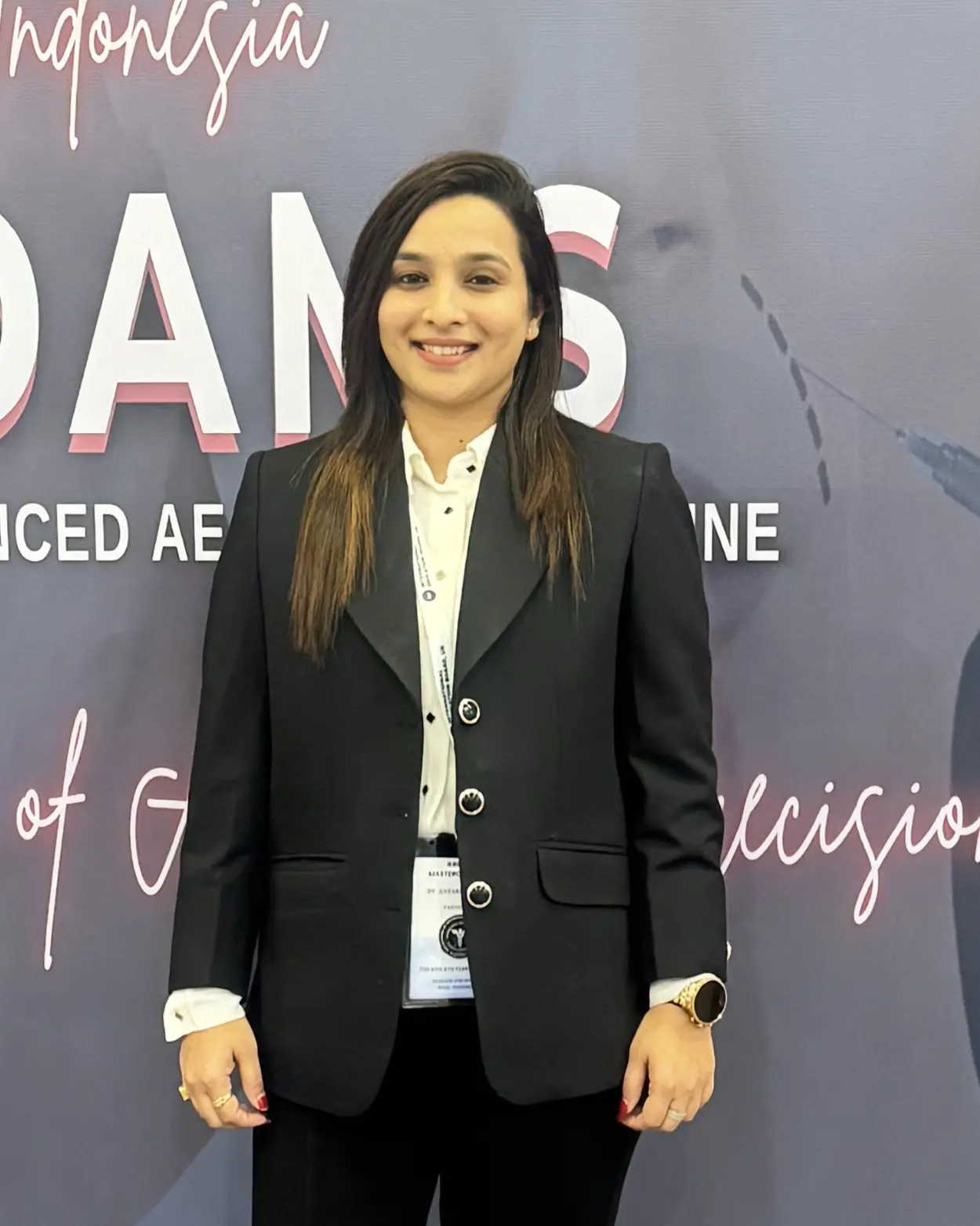
Reviewed by Dt. Antaksha Jagtap
Last Update : 31 March 2026
Why Are Doctors Rushing to Learn Hair Transplant?
Have you ever wondered why so many doctors are adding hair restoration to their practice? Hair loss is one of the most common complaints that patients have, and the number of individuals seeking the services of a professional transplant specialist is growing year after year.
But you cannot simply watch a few videos and begin working on actual patients. You require systematic training, which makes you confident at the base level. And that is where a hair transplant course for doctors comes in.
Being a dermatologist or a cosmetic surgeon and wishing to grow, taking a course in hair transplant may change your career entirely.
What Exactly is a Hair Transplant Course?
The hair transplant course is a professional training course for doctors who wish to master hair restoration surgically. An average course on hair transplantation includes the selection of the patient, scalp examination, harvesting of the graft, implantation, and post-surgery.
The most effective programs do not just end with theory. They expose you to actual patients and actual tools; therefore, you get the experience that really counts. The majority of the courses concentrate on two techniques:
- FUE (Follicular Unit Extraction): grafts are removed individually by micro-punches.
- FUT (Follicular Unit Transplantation): a piece of donor tissue is cut off, and grafts are peeled off under microscopes.
A good course on hair transplant would educate you on when and how to apply the different methods depending on the condition of the patient.
Why FUE Training is in Such High Demand
FUE is now the preferred procedure of majority of patients due to the absence of a linear scar and quicker healing. This is why the FUE training course is one of the most popular programs nowadays. The reason why many doctors prefer this course as their first hair transplant course is due to the increasing demand for patients.
In an FUE training course, physicians are taught to operate motorized and handheld punch devices, harvest grafts without injury, and make natural-looking hairlines. It is very exacting and requires a lot of practice, and that is the reason live patient sessions are important.
Understanding FUT Hair Transplant Training
The FUT hair transplant course is as significant as FUE despite the fact that the latter receives the majority of attention. FUT enables surgeons to achieve many grafts at once, and is therefore best applied to severe cases of hair loss.
During a FUT hair transplant course for doctors, strip harvesting, microscopic graft dissection, slit creation, and wound closure will be taught. FUE and FUT are often used together by many surgeons, depending on the case, and therefore learning both will provide you with a clear clinical advantage.
What Should a Good Hair Restoration Course Include?
Not all training programs are the same. A quality hair restoration course should offer:
- Theoretical foundation: scalp anatomy, hair growth cycles, donor management, and patient assessment
- Live demonstrations: watching experienced surgeons perform real procedures
- Hands-on practice: performing extractions and implantations under expert supervision
- Post-operative protocols: managing healing, PRP therapy, and long-term follow-up
- Certification: a recognized credential that strengthens your professional profile
Any hair transplant course for doctors worth your time will prioritize practical exposure over classroom learning alone.
Why Hair Transplant Training in India is Booming
India has emerged quickly as a leading destination in medical aesthetics education. The training of hair transplant in India programs draws doctors in the country and also internationally due to low fees, qualified faculty, and a large number of patients.
Indian institutes provide an exposure to a great range of hair types, scalp conditions, and baldness patterns. This variety renders any hair transplant course for doctors studied in India much more comprehensive than those in most other countries.
The cities such as Pune, Mumbai, Delhi, and Bangalore have now become a big center in terms of hair transplant training India programs, and they offer as short as a certificate to advanced fellowship programs.
Does Hair Transplant Certification for Doctors Really Matter?
Absolutely. A doctor’s certification in hair transplant is not a mere document. It informs patients, peers, and clinics that you have been trained well.
Patients now do a search of their physicians before making a reservation. They verify credentials, reviews, and qualifications. A known hair transplant qualification from doctors creates immediate confidence. Most hospitals have made it a mandatory requirement that doctors must be certified before they can carry out transplant procedures. Therefore, it is not optional but necessary.
How to Choose the Right Hair Transplant Course
With so many options out there, picking the right hair transplant course for doctors can feel overwhelming. Here are some tips to help you decide:
- Check the faculty: are the trainers experienced surgeons who actively practice?
- Find live patient sessions: theory-only courses will not be enough.
- Inquire about batch size: the smaller the batch, the better the personal attention.
- Check the certification: ensure that it is acceptable in the industry.
- Read reviews: what do past students say about their hair transplant course experience?
Other facilities, such as AICMS (Advanced Institute of Cosmetic Medicine and Surgery), are based on a structured training with real clinical exposure led by faculty. AICMS is a hair transplant course for doctors that offers a combination of theoretical and practical study and is established by Dr. Aishwarya A. Gangawane, a board-certified maxillofacial and cosmetic surgeon who has international fellowships.
Career Opportunities After Completing Your Training
The career opportunities are also exciting once you have taken a course in hair transplant and become a certified one. You can open up your own clinic, introduce transplant services to an existing practice, serve with established centres, or develop a niche reputation as a specialist. The industry is simply expanding, and being trained is a step ahead.
Final Thoughts
So, in case you have been considering that you can add hair transplant to your skill set, it is time. A properly organized course in hair transplant provides you with the knowledge, practical experience, and confidence to provide actual results.
Select a course that emphasizes hands-on training, professional mentoring, and a meaningful certification. The hair transplant course in institutes such as AICMS will provide you with just that: a good education in aesthetic medicine that will equip doctors with the practice experience. Ready to take the next step? Connect and find a program that suits your objectives.
FAQs
1.Who can attend a course on hair transplant?
The majority of hair transplant training is accessible to medical graduates: MBBS, BDS, BAMS, BHMS, and MDS. There are programs that might need to have experience in dermatology or cosmetic surgery beforehand. Inquire about eligibility before application.
2.What is the average length of time that a hair transplant course for doctors lasts?
It is program-dependent. A short course in hair transplant can take a few days to two weeks, whereas the diploma or fellowship course can take several months. Hands-on patient session courses are more expensive and time-consuming, but provide a much more effective practical training.
3.What is the difference between the FUE and FUT methods?
FUE is a procedure whereby single follicular units are removed with small punches, and no linear scar is left. FUT involves the removal of a thin strip from the donor region that is further cut into separate grafts. FUE is better in small sessions and patients who are scar-conscious, whereas FUT is more effective in larger graft requirements.
4.Will I be able to open my own clinic after attending the course?
Yes, there are a lot of doctors who establish their own clinics or include transplant services to an existing practice following certification. Other good programs include clinic establishment, patient care, and marketing fundamentals.
5.Why should I choose AICMS for my hair transplant course for doctors?
AICMS provides faculty-based training that is organized and includes real clinical exposure and live patient sessions. The institute is based on small batch sizes, hands-on learning, and industry-recognized certification, and was founded by a board-certified cosmetic surgeon with international fellowships, Dr. Aishwarya A. Gangawane. It is among the most reliable brands of aesthetic medicine education in India.
Request a Call Back